What a Published Laundry-Pod Pouch Case Can Tell a Packaging Buyer
Use a documented Dow–Liby laundry-pod packaging project to frame the questions a buyer should ask about a new pouch, its evidence and its destination market.
By Kaida Group Co., Ltd. FJ
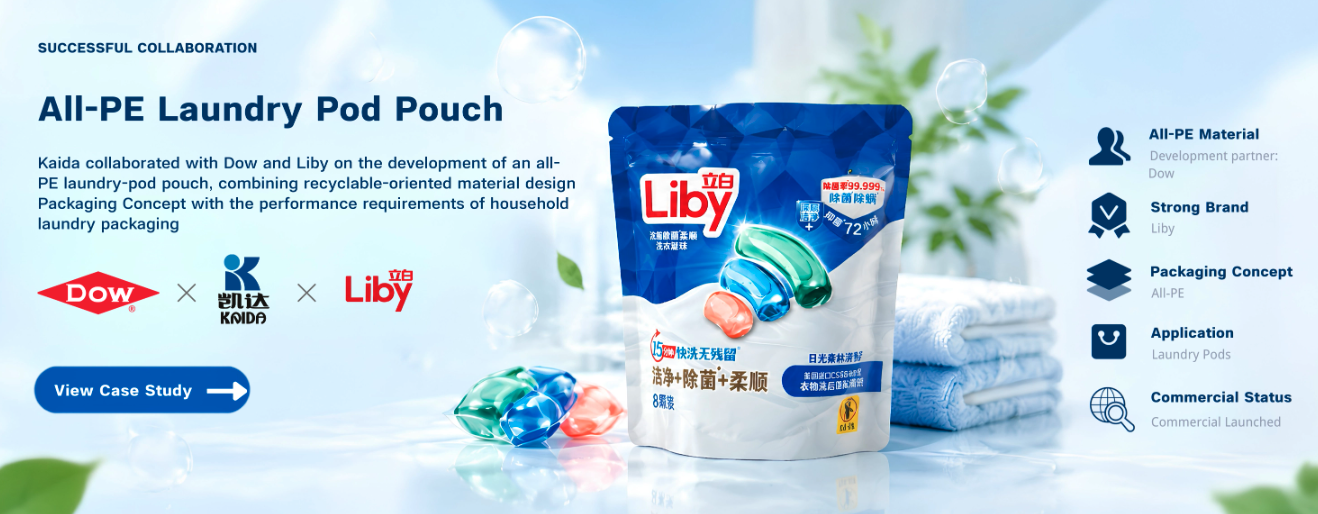
A published packaging case is useful when it tells a buyer what to verify next. In a 2022 announcement, Dow identified Fujian Kaida as the Chinese packaging manufacturer involved in an all-PE flexible-packaging solution adopted by Liby for laundry pods. The report also described site visits and a life-cycle comparison for that particular solution. Kaida Group Co., Ltd. FJ uses the name Fujian Kaida in historical materials, as explained in its company profile.
What the record establishes
The public record links a material supplier, a brand owner and a packaging manufacturer to one commercial application. Dow's 35% life-cycle carbon reduction figure relates to the compared packaging systems described in its 2022 announcement. It is not a measured result for every PE pouch, every application or a new buyer's project. The project graphic above names the collaborators and shows the laundry-pod pack; it does not replace a specification, test report or market-specific recycling assessment.
Turn the example into a project brief
Begin with the contents and the intended use: what is packed, how much, how the pack will be filled, how it must open and close, and what conditions it will face between filling and disposal. Then ask for the complete pack concept, including the body, seal, closure, print and any other components. A headline such as 'all-PE' is a starting design description; the final pack needs to be evaluated as a whole.
Agree on evidence for the proposed pack
Ask which performance requirements matter for the actual product, which sample will be tested, what methods and acceptance criteria apply, and who will keep the records. If a carbon or recyclability claim is planned, define the geography, comparison baseline and end-of-life assumptions before drafting marketing language. Evidence from a historical case is context for a new discussion, not a substitute for new-project evidence.
Make the next conversation concrete
A useful first request to Kaida Group can include product description, pack format, target size, filling equipment, performance priorities, destination market, expected quantity and timing. A clear brief lets the parties separate established facts from options needing development or validation. Use the official contact page to share that brief.
This article was prepared with AI assistance from the linked public sources and the supplied project graphic. It does not present independent verification of a new packaging design or a customer testimonial.